























Run by the Sun

A Solar Powered Ham Radio Station
Since I wrote this article I have been told that deep cycle batteries can be discharged regularly by 50%... Wikipedia agrees with this... So, I telephoned the company again that I bought the battery from and was told that they recommend 20% to increase the life of the battery... Therefore, regular discharge of deep cycle batteries of 50% or less is ok...
There's an interest nowadays in alternative forms of power but the most popular for Amateur Radio Operators would have to be Solar Power...
Although I don't know much about solar systems, I can share with you what I do know...
There are basically 3 components to a Solar Installation... The Battery, the Solar Panel and the Controller to regulate the current going into the battery from the solar panel...
The sizes of these depend on the amount of current you need to draw from the battery and the duration... Once you work out these 2 requirements, you're able to figure out the capacities of the 3 components... In my case for example, I operate CW on HF so the current draw on the battery would be about 20 Amps... For a 100 watt radio, using Ohm's Law, you would expect the current drawn using a 12 volt supply to be about 8 amps or so. ( 100W = 12V x 8.3A ) but because most modern solid state radios are only about 50 or 60% efficient on CW and a little more efficient on SSB, the current drawn is nearly double that... That's why most 100 watt radios which have 13.8 volt dc power supplies are rated at around about 20 amps...
So, if the transmitter was run for 1 hour, it would mean that the battery has used 20 Amp Hours in that period... Batteries are rated in terms of their voltage and the number of Amp Hours they can supply... However, batteries used with solar panels need to be of the ' Deep Cycle ' type... They should only be discharged up to about 20% of their capacity to extend their lifespan... If, for example, you have a 100 Amp Hour battery, it shouldn't be discharged by more than 20%. ie 20 Amp Hours so that 80 Amp Hours of the battery's capacity should still be available...
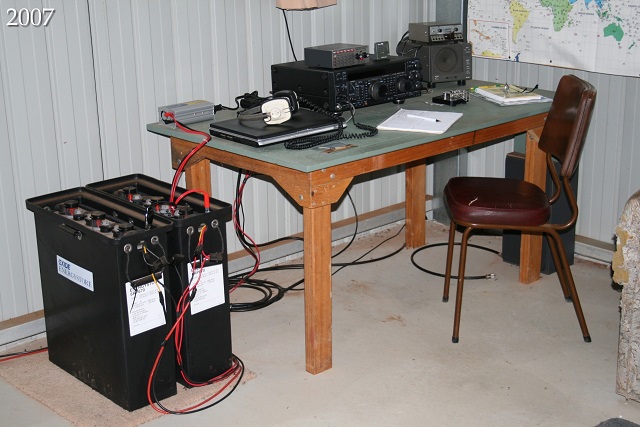
2007 - CW using a Yaesu FT-1000MP Field.
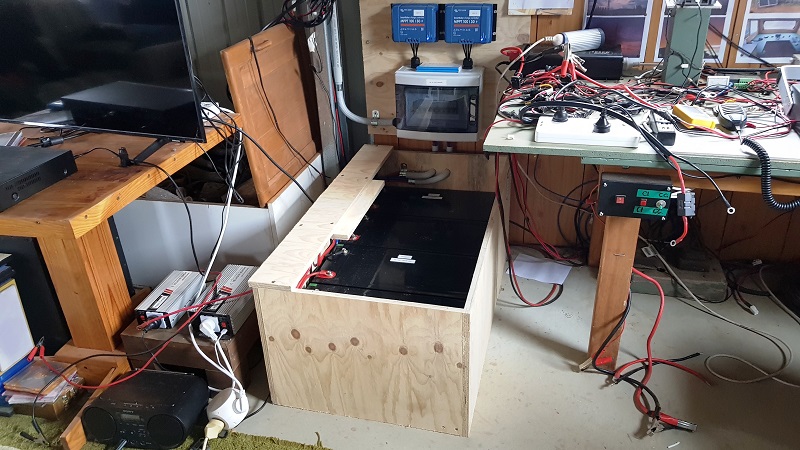
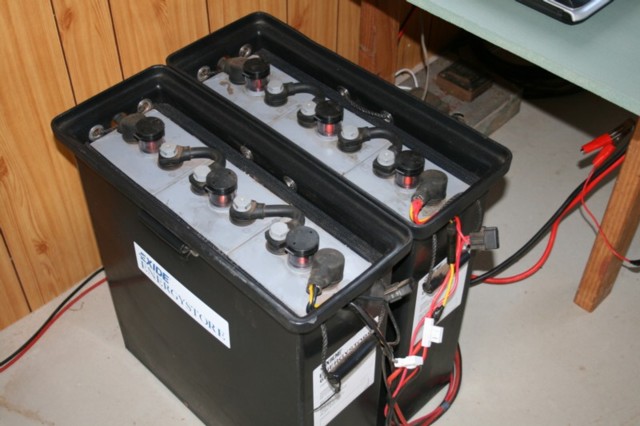
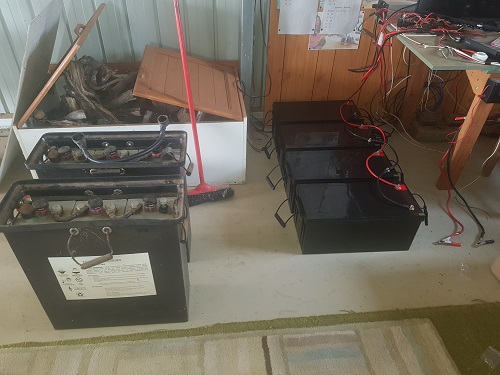
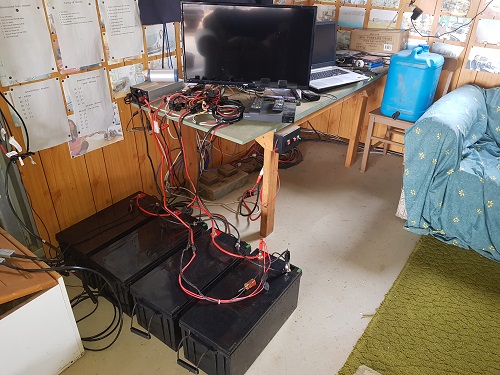
The battery shown in these images has a rating of 670 Amp Hours... 20% of that is approximately 130 Amp Hours... So, if the transmitter was to run for 6 and a half hours at 20 Amps, the battery would be down to the allowable ' discharge level '... There are many different types of batteries available nowadays but I bought a lead acid type made by Exide in the USA because it's a proven and reliable type of battery, old technology... It consists of 2 volt cells in series to form 6 volt batteries, 2 of which make up the 12 volt supply... A battery this size can power a small house but you would need a number of panels to recharge the battery quickly due to the regular current drain by house hold appliances etc... They're not cheap... This one cost $1500 Australian in 2007 and the expected life is 10 years or more if looked after properly... ie. topped up with distilled water...
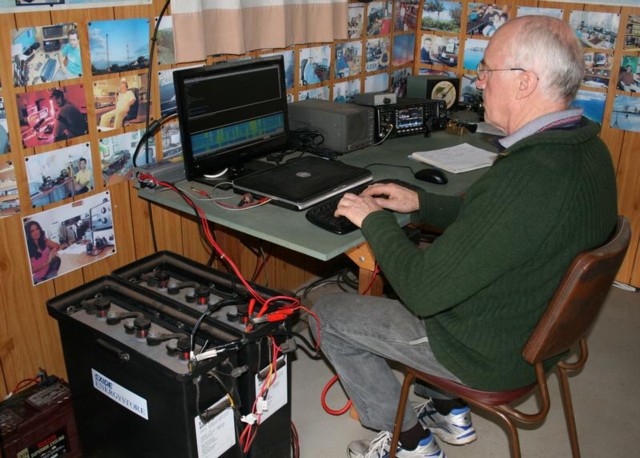
Present Day - BPSK31 using an Icom IC-7600.

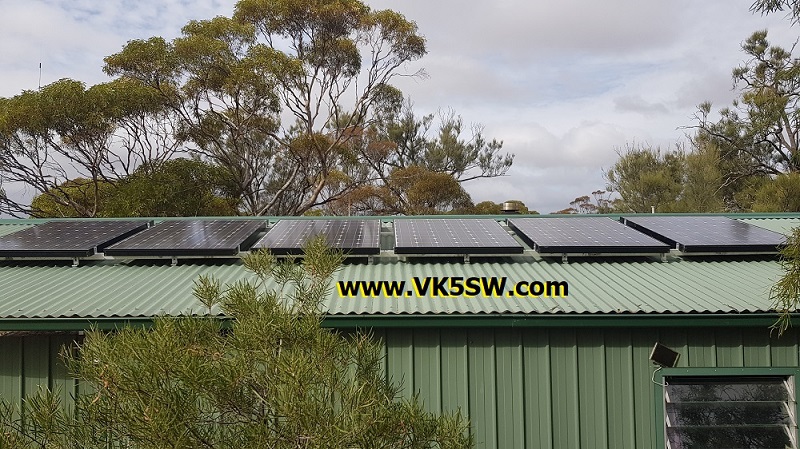
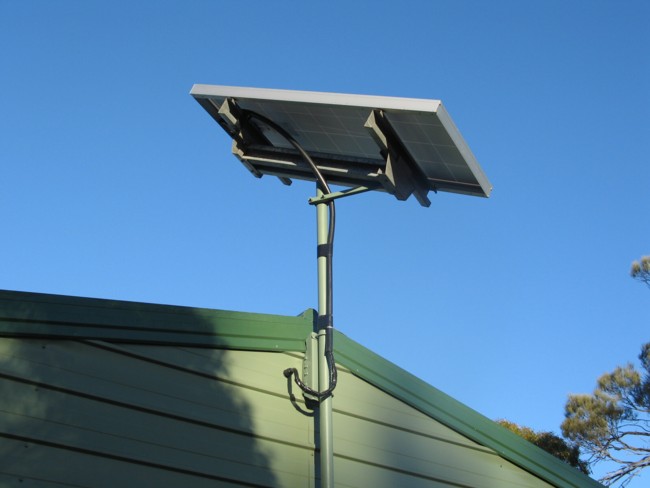
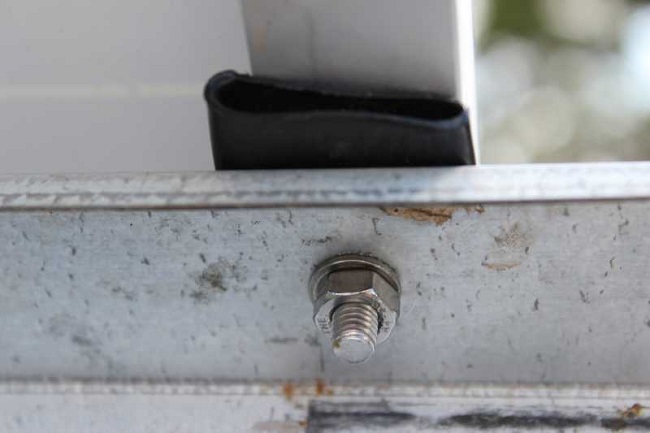
The voltage at the battery fluctuates with the current coming into it from the panel... It may swing from 12 volts or so of a night to 14.5 volts or so in the daytime... I have 3 different radios that I've used with this battery and the voltage swing doesn't seem to affect them... The amount of charge going into the battery is dependent on the size of the panel, it's direction towards the Sun and the availability of sunshine... Since we're not at the Radio QTH all the time and drawing current, the battery doesn't need to be charged quickly on a regular basis... One 80 watt panel is sufficient for my needs ie. to keep it charged... It's made by BP and at the time cost nearly $700 Aust... The direction that the panel faces is important to maximise the exposure to the Sun... Also, the angle to the horizon should be optimized to ensure that the Sun hits the panel as near as perpendicular as possible throughout the year, especially in the winter... High tech panel installations track the Sun...

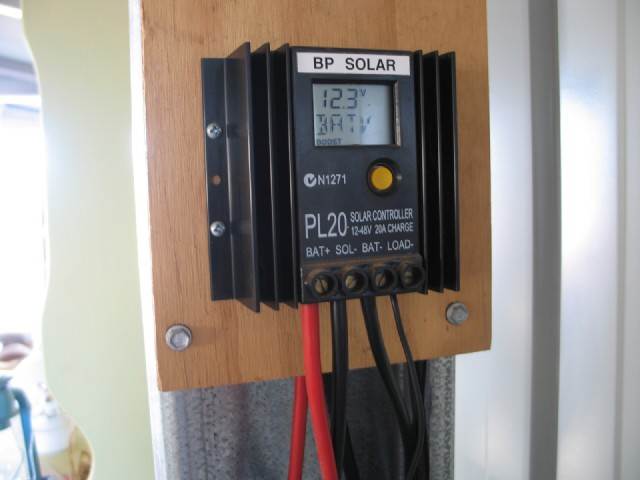
The ' Charge Controller ' or ' Regulator ' ensures that the right amount of current from the panel is fed to the battery... When there is a large current drain from the battery, the regulator will allow maximum current to flow into the battery from the solar panel... With the panel shown, a maximum current of nearly 5 Amps can be produced with a cloudless sky... When the battery is nearly fully charged, only a small amount of current is sent to it... The maximum Amp Hours this panel can manage at this QTH seems to be about 35 AH or so a day ... When buying the battery and panel, the sales people will sell you the appropriate controller as well... The solar controller like this one with an LCD screen is able to tell you a lot of information... eg. the voltage at the battery terminals at present, the amount of current going into the battery at the moment, the number of Amp Hours already gone into the battery so far today, the total Amp Hours sent to the battery each day etc...

The other consideration is the wires connecting components... To reduce voltage drop, ensure that you use heavy gauge wires and also use fuses in the main lines... Ask the sales people questions, they want your business...
I hope this is helpful in building your own Solar Powered Station...
Send me an email if I can be of help... Email
VK5SW Homepage
%20800.jpg)
Feel free to rate this page.
|